9 Best Blenders for Carrot Juice (November 2026)
The best blenders for carrot juice include the magic bullet® Personal Blender for small carrot portions, the Braun MultiQuick 5 Hand Blender for blending in a container, and the Ninja Professional Blender for family-size batches.
On this page (6 sections)
The best blender for carrot juice for most kitchens is the Ninja Professional Blender, with a 1000-watt motor and a 72 oz pitcher for larger batches. For a compact setup, choose the Magic Bullet for a small portion, or the Cuisinart Blender Juicer/Extractor if you want a dedicated extraction option.
Blending carrots makes a drink with the pulp still in it. Straining after blending is optional, so choose a blender based on serving size, kitchen space and how smooth you want the finished drink.
If you want a broader overview of size, controls and jar styles, start with our best blender to buy guide. If you want one appliance for both approaches, compare the tradeoffs in our juicer and blender combo guide.
Our picks at a glance
-
1

-
2

-
3

- 4
 Check it
Ninja Professional Plus Blender
Best for preset blending cycles - 5
 Check it
Consciot 11-Piece Blender for Kitchen and Personal
Best for multiple personal cup sizes - 6
 Check it
Cuisinart Compact Blender Juicer/Extractor
Best for blending and extracting - 7
 Check it
Savorfuze Smoothie Blender Grinder Combo
Best for personal blends and grinding - 8
 Check it
Cuisinart CPB-380P1 Hurricane Compact Juicing Blender
Best for travel cups and a small jar - 9
 Check it
Aeitto Blenders for Kitchen with 68Oz. Large
Best for large batches and preset modes
Which blender is best for carrot juice?
The best choice depends on how much carrot mixture you make at once and whether you plan to strain it. We compared motor and container details, controls, and the specific ways each model can handle blended drinks.
The Ninja Professional Blender is the top pick for larger batches because it has a 1000-watt motor, a 72 oz pitcher and blades designed to process whole fruits and vegetables. The Magic Bullet ranks first overall for a small portion and compact counter space, while the Cuisinart combo is the pick that includes a separate juice extractor.
For a closer brand comparison, read Vitamix vs Ninja blenders.
magic bullet® Personal Blender: Best for small carrot portions
- 250-watt motor
- 22 oz cup
- Compact countertop design
A compact personal blender for a small portion and a limited countertop footprint. Cut carrots into small pieces and add enough liquid to help them circulate.
Pros
- Compact size
- 22 oz cup
- Cups are top-rack dishwasher safe
Cons
- Smaller capacity than full-size pitchers
- Lower wattage than the countertop picks
Braun MultiQuick 5 Hand Blender: Best for blending in a container
- 350-watt motor
- Two speeds
- Beaker and whisk included
The blending wand and beaker suit small batches blended directly in a container. Its hand-held format calls for small carrot pieces and enough liquid for the blade to move.
Pros
- Blend in the included beaker
- Two speeds
- Detachable blending head
Cons
- Small beaker for batch juicing
- Requires holding and moving the wand
Ninja Professional Blender: Best for family-size batches
- 1000-watt motor
- 72 oz pitcher
- Total Crushing blades
The large pitcher and 1000-watt motor make this a practical option for blending several servings. Its blades are designed to process whole fruits and vegetables, though carrots should still be cut into pieces.
Pros
- Large pitcher
- BPA-free pitcher is dishwasher safe
- Recipe guide included
Cons
- Large countertop footprint
- Straining is needed for a smoother juice
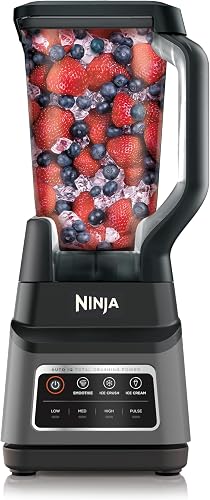
Ninja Professional Plus Blender: Best for preset blending cycles
- 1400 peak watts
- 72 oz pitcher
- Three Auto-iQ programs
Three timed Auto-iQ programs combine pulsing, blending and pauses. The large pitcher is suited to multiple servings, and the stacked blade assembly is dishwasher safe on the top rack.
Pros
- Three preset programs
- 72 oz pitcher
- Dishwasher-safe pitcher and blade assembly
Cons
- Large pitcher may be more than a small batch needs
- Does not separate juice from pulp
Consciot 11-Piece Blender for Kitchen and Personal: Best for multiple personal cup sizes
- 900-watt maximum motor
- 24 oz, 17 oz and 10 oz cups
- Detachable blade parts
Three cup sizes let you match a small carrot blend to the serving you want. Cut the carrots into pieces and use enough liquid to help the contents move through the blades.
Pros
- Three cup sizes
- Cups and blade assembly are dishwasher safe
- Self-cleaning cycle
Cons
- Personal cups limit batch size
- No juice separator
Cuisinart Compact Blender Juicer/Extractor: Best for blending and extracting
- Blender and juice extractor
- 450-watt peak motor
- 16 oz blending cup
This compact combo includes both a blending cup and a juice extractor. The extractor is described for carrots, apples and other produce, while the cup handles blended drinks.
Pros
- Separate juice extractor included
- Three control options
- Compact dimensions
Cons
- Small blending cup
- Extractor produces 8 to 16 oz of juice
Savorfuze Smoothie Blender Grinder Combo: Best for personal blends and grinding
- 900-watt motor
- Two 700 ml blending cups
- Separate grinder blade
Two blending cups support personal portions, and the separate flat blade is intended for grinding. For carrot juice, use the cross blade, cut carrots small and add liquid.
Pros
- Two blending cups
- Separate grinder attachment
- Dishwasher-safe cups and blades
Cons
- Personal-size cups
- No pulp separation
Cuisinart CPB-380P1 Hurricane Compact Juicing Blender: Best for travel cups and a small jar
- 32 oz Tritan jar
- Pulse, low and high controls
- Two travel cups
The 32 oz jar offers a middle ground between personal blenders and a family pitcher. Travel cups and a chopping cup add options for smaller kitchen jobs.
Pros
- 32 oz jar
- Two travel cups with lids
- Removable blade assembly
Cons
- Smaller jar than full-size picks
- Blending does not separate pulp
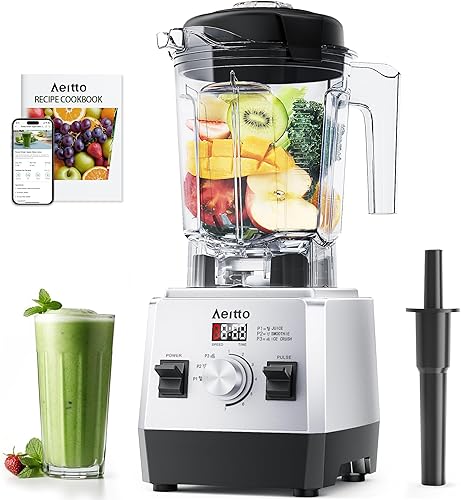
Aeitto Blenders for Kitchen with 68Oz. Large: Best for large batches and preset modes
- 1800-watt maximum power
- 68 oz jar
- Three preset programs and seven speeds
A large jar and multiple speed choices suit households making several servings. Its preset juice program is one control option, but a blended drink may still need straining for a smoother texture.
Pros
- 68 oz jar
- Three preset programs
- Detachable parts are dishwasher safe
Cons
- Large capacity may not suit single servings
- Maximum wattage is not a measure of juice smoothness
How we chose these blenders for carrots
We compared the listed motor, container size, controls and included attachments against the main steps in making carrot juice: breaking down cut carrots, adding enough liquid to blend, and straining if you want less pulp. A blender’s wattage alone cannot guarantee a smooth result, so batch size and blade circulation matter too.
We favored models with a useful container size and clear blending controls. Personal blenders can suit one drink, while a full-size pitcher is more practical when you want several servings.
Blending and juicing produce different textures. A blender combines the carrot with liquid and retains pulp unless you strain it; an extractor separates juice during the process.
How to choose a blender for raw carrots
A blender for raw carrots needs enough room for cut pieces to circulate with liquid, plus a container size that matches the number of servings you make. For a model-focused look at a quieter option, read our Black and Decker Quiet Blender review.
Consider the cleanup and storage footprint as well as motor power.
Compare immersion blenders and food processors if you're choosing an appliance for other kitchen tasks.
What power and capacity work for carrot juice?
A full-size pitcher is convenient for several servings, while a personal cup limits the batch and can go straight into a travel lid if one is included. The Ninja Professional has a 72 oz pitcher, and the Cuisinart CPB-380P1 has a 32 oz jar.
For an individual drink, the Magic Bullet has a 22 oz cup. The Braun hand blender includes a 20 oz beaker, though its wand format means you blend while holding and moving the handle.
For a portable personal option, see our NutriBullet portable blender review.
A higher wattage rating can be a useful comparison point, but it doesn't tell you exactly how finely the blender will process carrot pieces. Cut carrots into similar small pieces, add liquid, and blend in batches that leave space for the contents to move.
Should you blend or extract carrots?
Blending is a good fit when you want the carrot pulp in the drink or want one appliance for smoothies and other foods. You can strain afterward to reduce pulp, but that adds a step.
An extractor separates juice from pulp during processing. The Cuisinart Compact Blender Juicer/Extractor includes a separate extractor that is described for carrots, alongside a 16 oz blending cup for smoothies.
For another appliance combination, see whether an Oster blender uses a food processor attachment.
If the choice between blending and extraction is still unclear, our juicer and blender combo comparison explains what each appliance type does. For blended carrot juice, follow our how to juice carrots in a blender step-by-step guide for prep, liquid and straining.
Are personal blenders practical for carrots?
Personal blenders can work for a small serving if you cut carrots into short pieces and avoid overfilling the cup. Their smaller containers are easier to store, though you may need several batches for more than one person.
The Magic Bullet is the most compact option here, while the Consciot offers three cup sizes. For a brand-specific comparison, see our best Ninja blender for juicing picks and best Vitamix blender for juicing guide.
How to get smoother carrot juice from a blender
For a smoother result, cut carrots into small pieces, blend with enough liquid for circulation, and strain the mixture after blending. These steps help manage texture without assuming a blender will separate pulp by itself.
Wash and trim the carrots, then cut them into pieces small enough to sit below the blade area. Add a modest amount of water, blend, and pause to scrape down the sides if pieces remain stuck above the blades.
If the mixture is too thick, add more liquid in small amounts and blend again. Pour it through a fine sieve or nut milk bag, pressing the pulp gently if you want to recover more liquid.
For a citrus variation, squeeze lemon into the finished drink. Our guide to how much juice is in a lemon can help you estimate how many lemons to prep.
What else should you check before buying?
The right jar and cleanup routine can matter as much as motor power when you plan to make carrot drinks often. Check whether the parts that touch food can go in the dishwasher and whether the container fits your usual batch.
A compact blender saves space but may require repeated batches for a family. A full-size jar can handle more mixture, but takes more counter and storage room.
Some jars are plastic or Tritan, and the Braun includes a plastic beaker. If jar material matters to you, see our guide to using a Vitamix blender glass jar.
Which blender should you choose for carrot juice?
Choose the Ninja Professional Blender if you regularly make several servings and want a large pitcher. Pick the Magic Bullet for a compact single portion, or the Cuisinart combo if a separate extractor is useful for your routine.
If you want blended carrots with the fiber, any of these blender formats can work with small pieces and enough liquid. If you prefer juice separated from pulp, choose an extractor or plan to strain the blended mixture.
Our top 3 picks at a glance
-
1
-
2
-
3
Frequently asked questions
Can a blender make juice from raw carrots?
Yes. Cut raw carrots into small pieces, add water or another liquid, and blend until the mixture is as smooth as your blender can make it.
Blending keeps the fiber in the drink.
Strain the mixture through a fine mesh sieve or nut milk bag if you prefer less pulp.
Do you need to cook carrots before blending them?
No, you can blend raw carrots if you cut them into small pieces and add enough liquid to help them move through the blades.
A powerful countertop blender and a smaller batch can make blending easier. Stop and scrape down the sides if pieces stay above the blades.
How do you make carrot juice less pulpy?
Strain blended carrots through a fine mesh sieve, nut milk bag or clean cloth, then press the pulp to release more liquid.
For a thinner drink, add water a little at a time and blend again. A blender cannot separate the juice from the fiber on its own.
Is a blender or juicer better for carrot juice?
A blender is useful if you want a drink that keeps the blended pulp, while a juicer separates liquid from much of the fiber during extraction.
Choose based on the texture you like and how much cleanup you want. A blender also handles other tasks such as smoothies and sauces.
Should you add water to carrots in a blender?
Usually, yes. Carrot pieces can be dense, so a little water helps the blades circulate the mixture and blend more evenly.
Start with a small amount, blend, then add more until the texture suits you.
Too much water can make the drink thinner than you want.


