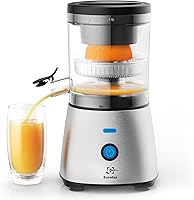
Breville Citrus Press vs Pro: Which Should You Choose? (November 2026)
Choose the Breville Citrus Press Pro if you want an assisted lever and a die-cast metal body; choose a standard citrus press if simpler pressing suits your routine. The Pro's published features include a safety switch, drip-stop spout and dishwasher-safe removable parts.
On this page (8 sections)
- Breville Citrus Press vs Pro: what is the main difference?
- What does the Citrus Press Pro upgrade add?
- Is the standard Breville citrus press enough?
- Which press fits your juicing routine?
- How do cleanup and counter space compare?
- Is a citrus press the same as a cold-press juicer?
- What should you check before choosing the Pro?
- Breville Citrus Press vs Pro: which should you choose?
Choose the Breville Citrus Press Pro if you want a power-assisted lever and a die-cast body; choose a standard citrus press if those upgrades don't match your needs. In this Breville citrus press vs pro comparison, the Pro's listed features include a Quadra-Fin cone, a drip-stop spout and dishwasher-safe removable parts.
The exact standard Breville press isn't identified in the information available for this comparison. Check the model number and features of the standard press you're considering before treating the Pro's construction and conveniences as upgrades over it.


Breville Citrus Press vs Pro: what is the main difference?
The Pro's standout features are its assisted arm, die-cast construction and drip-stop spout. The Pro also has a safety switch and removable parts that can go in the dishwasher.
The arm applies downward pressure through the juicing process. A dual-switch safety design prevents the cone from spinning until the arm is down and sufficient pressure is in place.
Its Quadra-Fin cone is made of acid-resistant die-cast material. Breville describes the cone as designed to extract juice from citrus of different sizes.
These are concrete features to compare against the standard model's specifications. A name that includes “Citrus Press” doesn't confirm that another model has the same arm, cone, materials or cleanup setup.
What does the Citrus Press Pro upgrade add?
The Pro combines assisted pressing with metal construction and a drip-stop spout. Those features matter most if you plan to press citrus often and want the arm to do part of the work.
The Pro's body is die-cast, and its cone is die-cast stainless steel. Both are described as resistant to citric acid, which is relevant for a tool that regularly handles citrus juice.
Its hinged arm helps apply pressure while you press. The safety switch adds a control step before the cone can spin, so you lower the arm and apply pressure to start operation.
The drip-stop spout holds juice back to help prevent drips onto the counter. That can be useful when you move a glass or container between batches.
The Pro has an 800 ml capacity and measures 10.3 x 14.02 x 7.6 in in depth, width and height. At 10.6 lb, it also deserves a planned spot on your counter or in storage.
Is the standard Breville citrus press enough?
The standard press is enough if it meets your needs without the Pro's specific upgrades. Confirm its model number, construction, arm mechanism and cleaning instructions before you decide.
Compare the features you will notice every time you make juice. An assisted arm, a safety switch and a drip-stop spout can be useful, but they may not matter much if you press only a small amount now and then.
Also check what comes apart for cleaning. The Pro's cone, collector, filter and fruit dome are dishwasher-safe, while you should follow the cleaning instructions for the standard model you have in mind.
Don't rely on the word “standard” to describe a single set of features. If you have a particular Breville model in mind, use its exact model number when comparing it with the 800CPXL.
Which press fits your juicing routine?
Choose by how much citrus you press, how much effort you want to use and how you plan to clean up. The Pro is a corded electric press; a manual lever is another option if you prefer to skip the motor.
When is the Pro a practical choice?
The Pro suits a kitchen where you regularly press oranges, lemons, limes or grapefruit and want power assistance. Its 800 ml collector can hold several servings, and the spout is designed to help limit drips.
It weighs 10.6 lb, so consider whether it will stay on the counter or need to be moved between uses. Its corded motor also means you need a suitable outlet near the place you plan to use it.
If you're comparing electric models for a smaller kitchen, see our guide to best small electric citrus juicers. For larger batch needs, compare the options in best commercial electric citrus juicers.
When does a manual press make more sense?
A manual press avoids a motor and cord, while its lever provides mechanical advantage. The Zulay Kitchen Cast Iron Juicer has a 5 in bowl designed for citrus from limes to grapefruits, but it's a different style of press from the Breville Pro.
Manual does not mean compact. The Zulay measures 7 x 11.25 x 15.75 in and is for hand washing, so allow room for its height and cleanup.
If you want electric pressing for lemons in particular, our best electric lemon squeezer guide covers that narrower search. For a broader view of powered presses, browse our best electric citrus juicers.
How do cleanup and counter space compare?
The Pro's removable parts are dishwasher-safe, while its full-size body needs a stable counter or storage space. Compare the parts you must wash, not just the appliance's finish.
Breville says the Pro's juicing cone, collector, filter and fruit dome can go in the dishwasher. Remove the fruit dome after pressing, and follow the care instructions for the motorized body.
Measure your usable counter space before choosing. The Pro's width is about 14 in, and its height is 7.6 in; include room to operate the arm and place a glass below the spout.
A compact electric citrus juicer may take less space, but it can have a different way of pressing and collecting juice. Match the device to your fruit and serving routine instead of assuming a smaller body will feel the same to use.
Is a citrus press the same as a cold-press juicer?
No. The Breville Citrus Press Pro is designed for citrus, while “cold-press juicer” usually describes a different juicer style.
The Pro's stated fruit range is oranges, lemons, limes and grapefruits.
If you want to understand the difference in juicer types, read what a press juicer is. That distinction can help you avoid buying a citrus press for a job that calls for another kind of juicer.
A citrus press may fit if your recipes center on citrus juice, cocktails or dressings. For broader produce choices, compare the intended ingredients and process before buying.
What should you check before choosing the Pro?
Verify the standard model's exact features, then compare them with the Pro's arm, materials, cleanup and size. The upgrade is worthwhile only if those differences solve a real need in your kitchen.
Check the model number and confirm the standard press's capacity, power, parts and cleaning method. Then consider how often you'll press, whether you want an assisted arm and where the unit will sit.
For general context on how juicing fits your habits, see what are the pros and cons of juicing? A guide for beginners.
The choice between two presses is easier when you know what you'll make and how often.
Breville Citrus Press vs Pro: which should you choose?
Choose the Citrus Press Pro if you value its assisted arm, die-cast construction, drip-stop spout and dishwasher-safe removable parts. Choose the standard press if its confirmed features cover your routine and you don't need those Pro details.
If you press citrus often, have counter space and want the arm to help apply pressure, the Pro has a clear feature case. If you press occasionally, compare the standard model's exact specifications before paying for a more substantial build.
For a motor-free option, consider a manual lever press. If you want a smaller electric unit, use our best small electric citrus juicer guide to compare formats.
Frequently asked questions
What is the difference between the Breville Citrus Press and Citrus Press Pro?
The Citrus Press Pro is described with a power-assisted lever, a die-cast body and cone, a Quadra-Fin cone, a safety switch and a drip-stop spout. Compare those features with the exact standard model you're considering, since its specifications aren't included here.
Is the Breville Citrus Press Pro manual or electric?
The Citrus Press Pro is a corded electric juicer with a power-assisted arm and a 110-watt motor. Its safety switch keeps the cone from spinning until the arm is lowered and sufficient pressure is applied.
Can the Breville Citrus Press Pro go in the dishwasher?
The cone, juice collector, juice filter and fruit dome are dishwasher-safe. The product details don't say that the whole unit can go in a dishwasher, so keep the motor and body out of the wash.
Is the Citrus Press Pro worth choosing for occasional juice?
For occasional citrus, the Pro's assisted arm and removable dishwasher-safe parts may be more features than you need. Compare your batch size, counter space and cleanup preference with a smaller electric press or a manual lever press before choosing.
Can the Breville Citrus Press Pro juice fruit other than oranges?
Yes. The Citrus Press Pro is intended for oranges, lemons, limes and grapefruits, and its Quadra-Fin cone is described for citrus fruits of different sizes.
It's a citrus press, so don't choose it for apples or other non-citrus produce.