9 Best Juicers for Leafy Greens (November 2026)
The best juicers for leafy greens include the TUUMIIST Juicer Machines for slow leafy green juicing, the EanOruus Juicer Machines for big batches with greens, and the nutribullet® Juicer for quick, firm produce.
On this page (8 sections)
- How we chose a juicer for leafy greens
- Compare these juicers for leafy greens
- The best juicers for leafy greens
- What should you look for in a leafy greens juicer?
- How do you reduce wet pulp when juicing greens?
- Which greens can go in a juicer?
- More guides on this topic
- Which juicer should you choose for leafy greens?
The best juicer for leafy greens is a slow masticating model with a feed path that can grip leaves and move them steadily into the auger. We compared the listed features and specs, giving priority to low-speed pressing, greens-friendly feeding, pulp control and cleanup.
The highest-scoring picks here are slow juicers. The NutriBullet and Magic Bullet are centrifugal options, which may suit people who also juice firm produce and want a different style of machine.
Our picks at a glance
-
1

-
2

-
3

- 4
 Check it
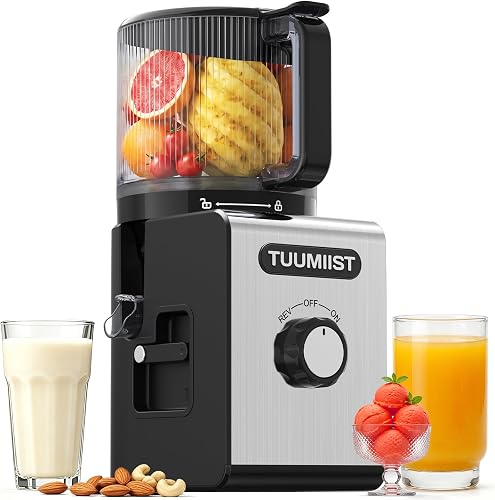
TUUMIIST 3-in-1 Juicer Machines
Best for greens and nut milk - 5
 Check it
Ninja NeverClog Cold Press Juicer
Best for pulp texture control - 6
 Check it
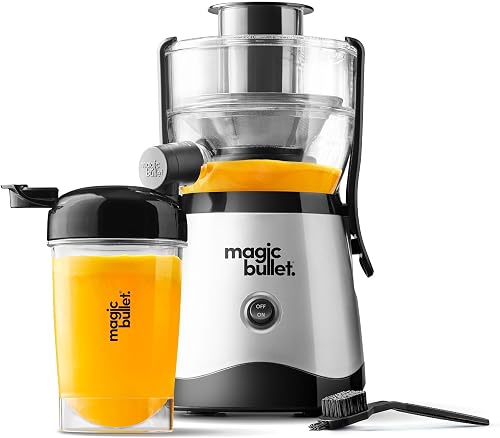
Magic Bullet Mini Juicer with Cup
Best for a compact counter - 7
 Best for leafy greens in a small kitchenCheck it
- 8
 Check it
Aeitto Cold Press Juicer Machines
Best for hands-free greens - 9
 Best for clearing leafy pulpCheck it
How we chose a juicer for leafy greens
The best juicer for greens needs to feed leaves reliably and leave pulp that is not overly wet. We compared the available machine features, including feed chute size, auger design, reverse functions, pulp filters, batch capacity and cleaning details.
A wider chute can reduce prep for larger produce, but it does not automatically make a juicer better at leaves. Leafy greens are light and flexible, so steady feeding and a way to address pulp buildup matter too.
Wet pulp can come from the ingredient, how quickly you feed it, or how well the machine presses it. Product descriptions do not provide a common measured yield test across all nine models, so treat high-yield language as a maker claim rather than a direct comparison.
The score weighs specs and features against what you need for greens, along with buyer feedback. Our guide to how masticating juicers work explains why a slow auger is often considered for leafy ingredients.
Compare these juicers for leafy greens
The strongest fits combine slow pressing with helpful feed and pulp features. The comparison table also includes two centrifugal models for buyers who want a compact option or juice firm produce more often.
| Product | Best for | Feed chute | Speed | Power | Our score |
|---|---|---|---|---|---|
| TUUMIIST Juicer Machines | slow leafy green juicing | 5.8 in | 55 RPM | 300 watts | 9.5 |
| EanOruus Juicer Machines | big batches with greens | 6.5 in | 250 watts | 9.4 | |
| nutribullet® Juicer | quick, firm produce | 3 in | 9.3 | ||
| TUUMIIST 3-in-1 Juicer Machines | greens and nut milk | 6.5 in | 60 RPM | 9.3 | |
| Ninja NeverClog Cold Press Juicer | pulp texture control | 9.2 | |||
| Magic Bullet Mini Juicer with Cup | a compact counter | 2 in | 9.1 | ||
| Fretta Juicer Machines | leafy greens in a small kitchen | 4.25 in | 200 watts | 9.0 | |
| Aeitto Cold Press Juicer Machines | hands-free greens | 250 watts | 8.4 | ||
| NEWBULIG Juicer Machines | clearing leafy pulp | 4.25 in | 200 watts | 8.2 |
The best juicers for leafy greens
These picks are ranked by their fit for feeding greens, managing fibrous pulp and handling everyday prep. Think about how often you make a batch and how much space you have before choosing a wide-hopper model.
TUUMIIST Juicer Machines: Best for slow leafy green juicing
- 55 RPM slow press
- 5.8 in feed chute
- 300 watts
- One-piece design
Slow pressing and an extra-wide feed chute suit greens mixed with larger produce. Its simple one-piece design is made for easier assembly and cleaning.
Pros
- Slow-speed cold press extraction
- Large feed chute
- Cleaning brush included
Cons
- Maker recommends a 20-minute cool-down after each 20 minutes of high-fiber juicing
The TUUMIIST Juicer Machines pairs a 55 RPM slow press with a 5.8-inch feed chute. That combination makes it our top pick for greens alongside other produce, with less need to cut larger ingredients before juicing.
Its one-piece design is described as easy to assemble and clean, and a brush is included. TUUMIIST says the 300-watt machine is designed for high juice yield, but there is no shared yield test here to compare that claim with the other picks.
The maker recommends pausing for 20 minutes after every 20 minutes of juicing high-fiber vegetables such as celery. If celery is part of your regular recipes, compare this with our best juicers for celery.
EanOruus Juicer Machines: Best for big batches with greens
- 100 oz hopper
- 6.5 in feed chute
- Juice and sorbet strainers
- AC brushless motor
A large hopper and wide chute make it a fit for batch prep with whole produce. It includes juice and sorbet strainers, and can also make nut milk.
Pros
- Large hopper for fewer refills
- Wide feed chute
- Reverse function
Cons
- Hand wash only
Choose EanOruus if you want to load a large batch before juicing. Its 100 oz hopper and 6.5-inch feed chute can take whole apples and oranges, while the included strainers cover juice and sorbet.
The maker describes its AC brushless motor as high torque for hard, fibrous ingredients. It also includes a reverse feature, which can help if leaves or other produce jam during juicing.
The unit is larger than the compact picks, so check your counter space before choosing it. Hand washing is required, a relevant trade-off if you plan to make greens several times each week.
nutribullet® Juicer: Best for quick, firm produce
- 800 watts
- Two speeds
- 3 in feed chute
- 27 oz pitcher
This centrifugal juicer has two speeds for soft or hard produce and a sealing pitcher for make-ahead juice. Its narrower chute means more prep for greens and other ingredients.
Pros
- Two speed settings
- Pitcher stores juice for up to 48 hours
- Dishwasher-safe sieve, pulp basin and pitcher
Cons
- Smaller feed chute than the slow juicers here
The nutribullet® Juicer is the centrifugal choice for someone who also wants to juice firm fruits and vegetables. Its two speeds give you separate settings for soft and hard produce, and the 27 oz pitcher seals for storage of up to 48 hours.
The sieve, pulp basin and pitcher are dishwasher-safe, which may appeal if easy cleanup matters more than a wide opening.
This model is built to North American and Canadian electrical standards. For a comparison focused on stalks, see our advice on how to juice celery.
TUUMIIST 3-in-1 Juicer Machines: Best for greens and nut milk
- 100 oz hopper
- 6.5 in feed chute
- 60 RPM
- Juice, sorbet and nut milk
The wide chute and large hopper suit full-recipe batches, while the same machine can make juice, sorbet and nut milk. Its maker says the slow extraction helps reduce waste.
Pros
- Wide feed chute
- Large hopper
- Three uses with one strainer
Cons
- Care instructions list both dishwasher-safe and hand-wash-only parts
The TUUMIIST 3-in-1 Juicer Machines combines a 6.5-inch chute with a 100 oz hopper for batch juicing. It is also designed for sorbet and nut milk, so it may suit a kitchen where one appliance needs to handle several jobs.
Its 60 RPM slow extraction and reverse function fit a greens routine, and the maker says the design aims to reduce waste. The machine has a single strainer for its three uses, which means fewer changes between tasks.
The care details list both dishwasher-safe and hand-wash-only instructions, so check the manual for the parts you plan to clean. Use the large hopper only if its size matches your usual batch needs.
Ninja NeverClog Cold Press Juicer: Best for pulp texture control
- 150-watt auger
- Two pulp filters
- Reverse program
- Dishwasher-safe juice-contact parts
Two interchangeable filters let you choose less pulp or more pulp in green juice. The reverse program can help clear jams as fibrous leaves move through the auger.
Pros
- Two pulp texture options
- Reverse program
- Compact design
Cons
- Smaller batch containers than the 100 oz hopper models
The Ninja NeverClog Cold Press Juicer stands out for two pulp filters. Choose less pulp for a smoother drink or lots of pulp for a thicker texture, then use the reverse program if ingredients begin to jam.
The 150-watt auger is described as suitable for fibrous and dense ingredients, including leafy greens. Its 24 oz juice jug and 36 oz pulp container are more modest than the 100 oz hopper options, which can be easier to manage for smaller batches.
Juice-contact parts are dishwasher-safe, and the compact design is intended to fit under kitchen cabinets. If your green juice starts with wheatgrass, our best wheatgrass juicer machines guide looks at that more specialized use.
Magic Bullet Mini Juicer with Cup: Best for a compact counter
- 400 watts
- 2 in feed chute
- 16 oz cup
- Top-rack dishwasher-safe attachments
Its small footprint and cup with a to-go lid suit single servings where storage space is tight. The centrifugal design and small chute are less tailored to leafy greens than the masticating picks.
Pros
- Compact footprint
- Juice directly into the included cup
- Top-rack dishwasher-safe attachments
Cons
- Small feed chute means more cutting and feeding
The Magic Bullet Mini Juicer with Cup is the smallest-footprint style of pick here, at 7 x 6 x 11.5 inches. Its included 16 oz cup fits beneath the spout and has a twist-on lid for carrying juice.
This is a centrifugal juicer with a 2-inch feed chute, so it is less tailored to leafy greens than the slow auger models. You may need to feed leaves in smaller portions and pair them with firmer produce to help move them through.
Top-rack dishwasher-safe attachments and a spout cap help keep cleanup simple. Pick it for a compact counter and single servings, rather than large batches of greens.
Fretta Juicer Machines: Best for leafy greens in a small kitchen
- 4.25 in feed chute
- 1 liter juice container
- Reverse function
- Juice, nut milk and sorbet
The compact vertical body and reverse function make this a practical fit for a smaller kitchen. Its maker describes the low-speed design as suitable for fibrous ingredients.
Pros
- Wider chute than compact centrifugal options
- Reverse function
- Multiple kitchen uses
Cons
- Hand wash only
Fretta suits a smaller kitchen that still needs a slow juicer with a wider opening. Its 4.25-inch feed chute and compact vertical shape can reduce prep and counter use compared with a larger hopper machine.
The maker describes it as a 3-in-1 juicer for juice, nut milk and sorbet. A reverse button is included to help clear blockages, and the juice container is listed at 1 liter.
Its parts are hand-wash only, and the maker says to open the bottom sealing plug when cleaning the bowl. That step is useful to know if you want to reduce leftover pulp after juicing leafy vegetables.
Aeitto Cold Press Juicer Machines: Best for hands-free greens
- 5.3 in wide-mouth hopper
- Self-feeding
- Reverse function
- Kale and spinach listed as uses
The self-feeding design and wide hopper can reduce manual feeding as you add produce. Kale and spinach are among its stated uses, and a reverse function is included.
Pros
- Self-feeding design
- Wide hopper
- Reverse function
Cons
- The maker's up to 99% yield figure is a claim, not a guarantee for every ingredient
Aeitto is the hands-free leaning choice, with a self-feeding design and a 5.3-inch wide-mouth hopper. Kale and spinach are among its recommended uses, and it includes a reverse function to help prevent clogging.
Its maker claims up to 99% juice extraction, but that figure should not be treated as a guaranteed result for every recipe or leaf. There is no common measured yield data here for a direct comparison.
The listing details do not specify care instructions or hopper capacity. If either will affect your routine, check those details before buying.
NEWBULIG Juicer Machines: Best for clearing leafy pulp
- 4.25 in feed chute
- Reverse anti-clog function
- Blade-free auger
- Cleaning brush included
The reverse function is designed to clear buildup from fibrous greens and firm produce. Its wide chute can also cut down on chopping for larger ingredients.
Pros
- Reverse anti-clog function
- Wide feed chute
- Detachable parts clean with water
Cons
- Hand wash only
NEWBULIG is a fit for shoppers who want a reverse function aimed at clearing fibrous pulp. Its maker says the auger can reverse when pulp builds up, including with greens or dense produce, without taking the machine apart.
The 4.25-inch feed chute reduces chopping for larger pieces, and the detachable parts rinse with water. A cleaning brush is included to help remove leftover fiber from the juicing parts.
The machine is hand-wash only, and its listed uses cover fruits and vegetables broadly. Choose it if a simple slow juicer with a reverse setting is more important than extra functions.
What should you look for in a leafy greens juicer?
For greens, prioritize a slow auger, a clear way to handle clogs, and parts you can clean without much effort. A very wide chute is helpful for whole produce, but it matters less if your main ingredient is a handful of leaves.
Check the pulp outlet and any included filters or reverse controls. Those details shape how you manage fibrous ingredients and adjust the texture of the finished juice.
Feed leaves gradually instead of stuffing the chute. Alternating greens with cucumber or apple can help carry leaves through, while trimming thick stems can make feeding easier.
How do you reduce wet pulp when juicing greens?
To reduce wet pulp, feed small bundles slowly and avoid overloading the juicer. Wetness varies by leaf type and freshness, so compare the pulp as you work and use a slower pace if leaves begin to bunch.
A reverse function can help clear buildup, while a pulp filter lets you adjust what reaches the juice. The Ninja offers two texture filters, and several slow models include reverse functions.
Rinse the juicer soon after use so leaf fibers do not dry around the screen or outlet. For more recipe and prep ideas, follow our guide to how to make green juice.
Which greens can go in a juicer?
Kale and spinach are common leafy choices, and some juicers also handle beet greens and cabbage. Wash leaves well, remove damaged parts, and cut thick stems to a size that feeds smoothly.
Not every green tastes mild or yields the same amount of juice. Start with a small amount, then combine stronger leaves with cucumber, apple or another ingredient that suits your recipe.
Our guides explain what a green juice is, how to juice kale, whether you can juice spinach, and whether cabbage can go through a juicer.
Wheatgrass is a different case because its fine, tough blades can be difficult for some household machines. If that is your main ingredient, compare wheatgrass juice powder and wheatgrass powder vs wheatgrass juice powder before choosing a juicing method.
More guides on this topic
- How to Make Kale and Spinach Juice
Which juicer should you choose for leafy greens?
Choose the TUUMIIST Juicer Machines for a slow press with a 5.8-inch chute, or EanOruus if you want a larger batch hopper. The Ninja makes sense when pulp texture control matters, while the NutriBullet suits a routine centered on firm produce and a dishwasher-safe pitcher.
For a compact counter, compare Fretta and Magic Bullet by how often you plan to juice greens. Pick a slow auger if leafy vegetables are your main ingredient, and use a centrifugal model if speed and firm produce matter more.
Our top 3 picks at a glance
-
1
-
2
-
3
Frequently asked questions
What type of juicer works best for leafy greens?
A slow masticating juicer is usually the better fit for leafy greens because its auger crushes and presses leaves at low speed. Look for a feed path that can handle leaves without bunching, plus a reverse function or easy access for clearing pulp.
Centrifugal models can juice greens, but their small chutes may take more prep and feeding.
How do you juice leafy greens without wasting them?
Fold or roll loose leaves into compact bundles, then alternate them with firmer produce such as cucumber or apple if your recipe includes it. This can help move leaves through the juicer instead of letting them collect around the feed opening.
Feed small amounts at a steady pace and clear the pulp when flow slows.
Is a masticating juicer better for kale and spinach?
A masticating juicer is often a practical choice for kale and spinach because the auger presses the leaves rather than relying on a fast-spinning basket. The result still depends on the machine, leaf size and feeding method.
For tips on a specific leaf, see can you juice kale and can you juice spinach.
Can you juice beet greens and cabbage?
Yes. Beet greens and cabbage can go through many juicers, though tough stems and dense pieces may need smaller portions or mixing with juicier produce.
Read can you juice beet greens and can you juice cabbage for ingredient-specific preparation advice.


