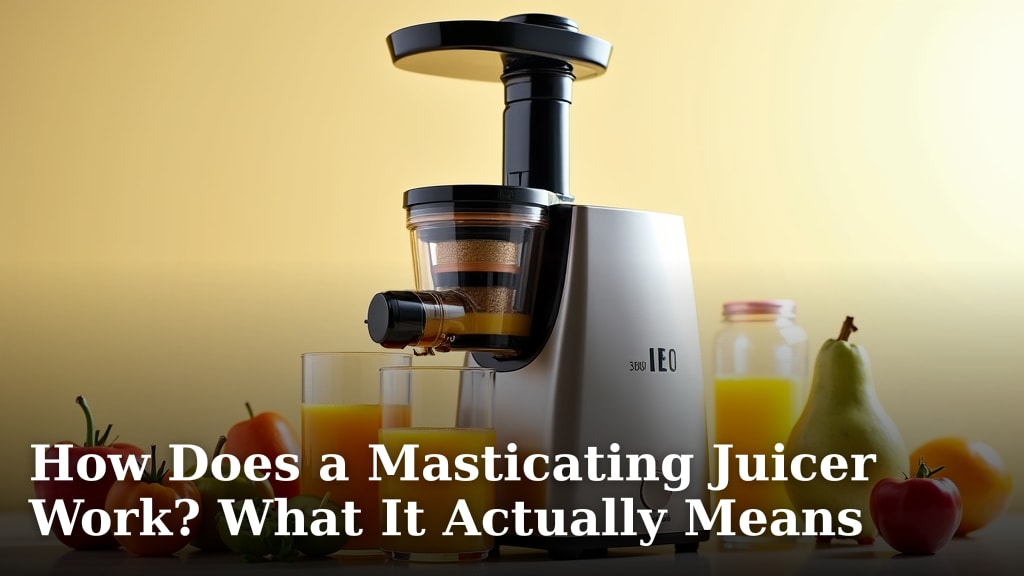
How Does a Masticating Juicer Work? What It Actually Means
Conclusion
A masticating juicer works by slowly crushing and pressing produce, which means you get more juice and more nutrients in your glass. This slow, deliberate method minimizes heat and air exposure, protecting the delicate vitamins and enzymes you want to keep. It’s also great for leafy greens and softer fruits, giving you a smoother, more efficient result than high-speed models. You’re now equipped to understand exactly what’s happening inside this type of juicer. Your next step is to compare a few trusted models and see how this slow-press method can work for your kitchen and your health goals.
Frequently Asked Questions
Is a masticating juicer better than a centrifugal one?
It depends on your priorities. Masticating juicers are better at extracting juice from leafy greens and produce higher juice yields with less oxidation. They are generally quieter and easier to clean, but they work more slowly than centrifugal models. For most people focused on nutrient retention and efficiency, a masticating juicer is the better long-term choice. Our guide to the pros and cons of juicing in general explores the broader benefits and drawbacks of the practice.
Can a masticating juicer make nut milks?
Yes, many models can. You can use it to make almond milk, oat milk, or other plant-based milks. The process is simple: you blend soaked nuts or grains with water, then run the mixture through the juicer to separate the milk from the pulp. It’s a versatile tool beyond just juicing fruits and vegetables.
Why are masticating juicers so quiet?
They are quiet because they operate at low speeds, typically around 80 RPM. This slow movement creates far less noise compared to high-speed centrifugal juicers, which spin at thousands of RPM. If you want to juice early in the morning without waking up the house, a masticating juicer is a much better choice.
How do I clean a masticating juicer?
Cleaning is usually straightforward. Most parts are detachable and can be rinsed under water. Use the included brush to scrub the screen and auger where pulp can get stuck. It’s important to clean it right after use to prevent pulp from drying and becoming harder to remove.
Can it juice hard vegetables like carrots and beets?
Absolutely. Masticating juicers handle hard vegetables very well. Their powerful auger slowly grinds through dense produce like carrots, beets, and apples, extracting a high amount of juice. You may need to cut them into smaller pieces to feed them into the chute, but the machine is designed for this tough work.