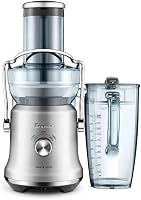
How Does a Centrifugal Juicer Work? A Closer Look
On this page (3 sections)
A centrifugal juicer works by shredding fruits and vegetables with a fast-spinning blade. This pulp then gets slung against a mesh filter, separating the juice from the solids. It’s a pretty clever system that gets you fresh juice quickly.
Think of it like a salad spinner on steroids. The main parts are a motor-powered spinning basket and a strainer. As the produce is pulverized, centrifugal force is the magic that pushes the liquid out. This method is known for its speed and efficiency in juice extraction.
- Centrifugal juicers use a motor to spin a blade at high speeds.
- This blade grinds up your produce into tiny pieces.
- Centrifugal force then pushes the juice through a mesh filter.
- Juice collects in one container, and the pulp is ejected into another.
So, how does this all come together to give you that delicious, healthy drink? Let’s walk through exactly how this works step by step.
Understanding How a Centrifugal Juicer Works
Centrifugal juicers are popular for good reason. They offer a fast and straightforward way to make fresh juice at home. You might be wondering how all those spinning parts manage to turn your fruits and veggies into a healthy drink. It’s a fascinating process that relies on a few key principles.
The Core Components at Play
At its heart, a centrifugal juicer is a system designed to extract liquid from produce using speed. You’ll typically find a few main parts working together. There’s the motor, which provides the power. Then comes the chute, where you feed your ingredients. Inside, you’ll discover a spinning basket and a special filter. These are the workhorses of the juicing process.
The Motor: The Powerhouse
Every centrifugal juicer has a motor. This motor’s job is to spin things very, very fast. Think of it like the engine in your car. It converts electrical energy into the rotational force needed to power the juicing mechanism. The strength of the motor often dictates how well the juicer handles tougher produce like carrots or beets. A more powerful motor usually means a more efficient machine.
The Feed Chute: Your Ingredient’s Entry Point
This is the opening at the top of the juicer. It’s where you’ll place your whole or pre-cut fruits and vegetables. Some chutes are wider than others. A wider chute means you can often fit larger pieces of produce in, saving you prep time. We found that wider chutes make the juicing experience much quicker.
The Spinning Basket and Blade: The Pulverizer
This is where the action really begins. Inside the juicer, there’s a basket that spins at extremely high speeds, often thousands of rotations per minute. Attached to this basket, or part of its design, is a sharp juicer blade. When you push produce down the chute, it hits this rapidly spinning blade. The blade’s job is to shred and pulverize the produce into very small pieces, almost like a high-speed blender or food processor.
The Filter or Strainer: The Separator
Surrounding the spinning basket is a mesh filter. This filter has tiny holes. As the produce is broken down by the blade, the spinning motion of the basket throws everything outwards. This is where centrifugal force comes into play. The force pushes the liquid pulp against the mesh filter. The juice, being a liquid, is able to pass through the small holes in the filter. The solid parts, like the fiber and pulp, are too large to fit through and are held back.
The Juicing Process: Step-by-Step
Let’s break down what happens from the moment you turn on the juicer until you have a glass of juice.
Step 1: Feeding the Produce
You start by placing your prepared fruits or vegetables into the feed chute. For most centrifugal juicers, you don’t need to chop them into tiny pieces. Many can handle whole apples or carrots, depending on the chute size. You then use a pusher tool to guide them down towards the spinning blade. It’s important to push them down gently and steadily.
Step 2: Shredding and Grinding
Once the produce reaches the bottom, it makes contact with the high-speed spinning blade. This blade is designed to shred the ingredients into tiny particles almost instantly. This process breaks down the cell walls of the produce. This allows the juice within those cells to be released.
Step 3: Applying Centrifugal Force
As the ingredients are shredded, the basket is spinning incredibly fast. This rapid rotation creates centrifugal force. This is the force that pushes everything outward from the center of the basket. Imagine swinging a bucket of water around your head; the water stays in the bucket due to this force. In the juicer, it’s pushing the shredded produce and released juice against the inner wall of the juicer, which is lined with the filter.
Step 4: Filtering the Juice
The mesh filter acts as a barrier. As the mixture of juice and pulp is pressed against it by centrifugal force, only the liquid juice can squeeze through the tiny holes. This is a crucial step for separating the drinkable juice from the fibrous pulp. Many experts suggest that the speed of the blade can cause some oxidation, which might affect nutrient content slightly over time (NCBI).
Step 5: Collecting the Juice and Ejecting the Pulp
On one side, the extracted juice passes through the filter and flows down into a collection container or directly into your glass. On the other side, the solid pulp is caught by the filter. As the juicer continues to spin and more produce is added, this pulp gets pushed towards the back or side of the juicer. It’s then ejected out through a separate opening into another container, often called the pulp bin. This continuous ejection keeps the juicer working efficiently.
Why Centrifugal Force Matters
The term “centrifugal” directly relates to this outward force. It’s the key principle that centrifugal juicers use. Without the high-speed rotation, the juice wouldn’t be effectively separated from the pulp. This method is very effective for extracting juice quickly. It’s a simple yet powerful physical principle that makes these juicers work so well for everyday use.
Comparing Juicing Methods: A Quick Look
Centrifugal juicers are just one type. It’s helpful to see how they stack up against others. This can help you understand their unique position in the juicing world.
| Feature | Centrifugal Juicer | Masticating Juicer (Slow Juicer) |
|---|---|---|
| Extraction Method | High-speed blade shreds produce; centrifugal force pushes juice through a filter. | Slowly grinds and presses produce to extract juice. |
| Speed | Very fast. | Slower. |
| Juice Yield | Good, but can be less than masticating juicers for leafy greens. | Often higher yield, especially for greens. |
| Heat Generation | Can generate more heat due to high speed, potentially affecting nutrients. | Generates less heat. |
| Noise Level | Can be louder. | Generally quieter. |
| Cost | Often more affordable. | Typically more expensive. |
Key Things to Remember About Your Centrifugal Juicer
To get the most out of your centrifugal juicer, keep these points in mind:
- Feed produce steadily: Don’t force it too hard.
- Prep might be minimal: Check your model for whole fruit capability.
- Clean soon after use: Pulp is easier to remove when fresh.
- Juice is best fresh: Drink it quickly after juicing.
- Understand the speed: High speed means fast results but some potential for oxidation.
Conclusion
You now have a clear picture of how your centrifugal juicer works. It’s a system built on speed and centrifugal force. A fast-spinning blade pulverizes produce, and the spinning basket slings the bits against a mesh filter. This action effectively separates the juice from the pulp. While they offer quick results, remember that this high speed can cause some oxidation. To enjoy your fresh juice at its best, clean your juicer promptly and drink your juice soon after making it. For a simple, speedy start to your home juicing journey, a centrifugal juicer is a solid choice.
Frequently Asked Questions
Will a centrifugal juicer handle leafy greens well?
Centrifugal juicers are generally better with harder, juicier produce like apples or cucumbers. While they can process leafy greens, they might not extract as much juice compared to masticating (slow) juicers. You might find more pulp remaining with less yield from greens. While they can process leafy greens, they might not extract as much juice compared to masticating (slow) juicers.
How noisy are centrifugal juicers?
Because they operate at very high speeds, centrifugal juicers tend to be quite noisy. The rapid spinning of the motor and blade creates a distinctive sound. If noise is a concern for you, you might consider a quieter masticating juicer.
Can I put whole fruits and vegetables into a centrifugal juicer?
Many centrifugal juicers have wide feed chutes that allow you to insert whole or larger pieces of produce, like apples or peeled oranges. This can save you prep time. Always check your specific model’s manual to see what size and type of produce it can handle.
Why is cleaning a centrifugal juicer important right after use?
Cleaning your centrifugal juicer immediately after juicing makes the task much easier. The pulp and juice residue are wet and soft when fresh, allowing them to be rinsed away easily. If left to dry, the pulp can become sticky and harder to remove from the filter and basket.
What does “oxidation” mean for my juice?
Oxidation is a natural process where juice is exposed to air, which can reduce its nutrient content and affect its flavor and color over time. The high-speed spinning in centrifugal juicers can introduce more air into the juice, leading to faster oxidation. This is why drinking the juice immediately after juicing is recommended.