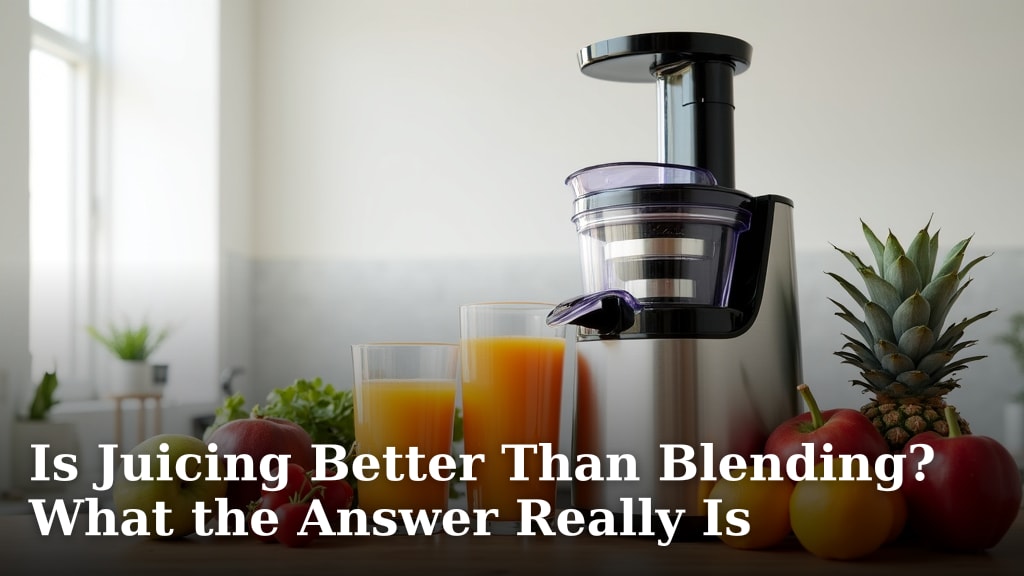
Is Juicing Better Than Blending? What the Answer Really Is
Whether juicing or blending is better depends entirely on your health goals, as neither is universally superior. For a quick, concentrated nutrient dose with minimal fiber, juicing wins. For whole-food nutrition and feeling full longer, blending is your best bet.
Both methods make it easier to eat more fruits and vegetables. Juicing removes pulp, which means you lose most of the fiber. Blending keeps everything intact, so your smoothie includes all the fiber from your produce. We found the right choice is about what your body needs right now.
- Choose juicing for a quick absorption of vitamins or if you need to rest your digestion.
- Choose blending for a complete meal replacement, sustained energy, and better blood sugar control.
- Blending retains more fiber, which is essential for gut health.
- Juicing can sometimes deliver a higher concentration of certain nutrients per ounce.
- Your budget and cleanup time are also real factors to consider.
Below, we’ll break down the pros and cons of each method so you can decide exactly which one fits your lifestyle and your goals.
Juicing vs. Blending: Which Method Fits Your Health Goals?
The short answer is neither is better. The best method depends entirely on what you want to achieve. For a quick, concentrated hit of nutrients with minimal digestive effort, juicing is the pick. For a balanced, filling meal that keeps you satisfied and supports steady energy, blending wins every time.
Understanding the Core Difference: Fiber
The single biggest difference comes down to one thing: fiber. When you juice, you extract the liquid and discard the solid pulp. That pulp is almost all dietary fiber. Blending, on the other hand, uses the entire fruit or vegetable, skin, seeds, and all.
Why Does Fiber Matter So Much?
We found that dietary fiber is essential for your body. According to the Mayo Clinic, fiber helps control blood sugar, keeps your bowels healthy, and helps you feel full. This fullness is what makes a green smoothie a meal and a green juice a supplement.
Slowing Down Sugar Absorption
When you drink juice, the natural sugars enter your bloodstream quickly. This can cause a rapid rise in blood sugar. Blending with all the fiber intact slows this process down. The fiber forms a gel-like substance in your gut, creating a buffer that releases sugar gradually.
The Case for Juicing: Concentration and Convenience
Juicing has a specific purpose. Think of it like a liquid vitamin supplement. It allows you to consume a large quantity of produce in a small glass. This can be helpful if you struggle to eat enough vegetables.
Potential Benefits of Removing Pulp
For some people, especially those with certain digestive issues, insoluble fiber can be irritating. A quick note: always talk to your doctor about this. In these cases, juicing provides the vitamins and minerals without the roughage. It’s also a fast way to get nutrients when you’re in a hurry.
Example: A Quick Nutrient Boost
Imagine you have a handful of kale, a cucumber, and a green apple. You could juice them all for a concentrated shot of vitamins A, C, and K. You’re drinking the essence of those vegetables very quickly. Many people use this method as a morning starter or an afternoon pick-me-up.
The Case for Blending: Whole Food Nutrition
Blending turns whole foods into a drinkable meal. You keep all the fiber, which is a major advantage. This fiber is your friend for long-term health and day-to-day energy management.
Fullness and Weight Management
A smoothie made with greens, protein, and healthy fats can be incredibly satisfying. You’re chewing your food in liquid form, which can trigger your body’s fullness signals more effectively than drinking juice. For a meal replacement, blending is the clear winner.
Sustained Energy Without the Crash
The fiber in a smoothie prevents the blood sugar spike and crash that can come from juice. This leads to more stable energy levels throughout your morning or afternoon. You’re less likely to reach for a sugary snack an hour later.
Nutrient Breakdown: What Each Method Preserves
Both methods make nutrients available, but in different ways. Juicing can sometimes deliver a higher concentration of certain micronutrients per ounce because the fiber bulk is removed. Blending ensures you get everything the plant had to offer, including the fiber that helps your body use those nutrients effectively.
| Feature | Juicing | Blending |
|---|---|---|
| Fiber Content | Very Low (most pulp discarded) | High (entire fruit/vegetable used) |
| Sugar Absorption | Fast (can spike blood sugar) | Slow (mitigated by fiber) |
| Fullness Factor | Low (acts more like a drink) | High (acts like a liquid meal) |
| Key Benefit | Concentrated nutrient delivery, easy digestion | Whole-food nutrition, sustained energy, gut health |
| Best For | Quick supplement, digestive rest, nutrient boost | Meal replacement, balanced snack, fiber intake |
| Typical Yield | Less volume (concentrated) | More volume (diluted with whole ingredients) |
Choosing Based on Your Specific Health Goal
Your best choice changes based on what you need today. Think of your goal as your guide. We found that matching the method to your objective gives you the best results.
Goal: Quick Recovery or a Post-Workout Drink
If you need to replenish electrolytes and vitamins fast after a workout, a juice can work well. It’s easily absorbed. For more substantial muscle recovery, a blend with protein powder and carbs (like banana) is superior.
Goal: Digestive Health and Regularity
For supporting your gut and promoting regular bowel movements, fiber is king. Blending is the obvious choice here. The insoluble fiber from fruits and vegetables adds bulk to stool and keeps things moving.
Goal: Increased Vegetable Intake
Both methods help you eat more produce. If you’re new to greens, you might tolerate the taste in a blended smoothie with fruit more easily. If you’re confident you’ll drink it, a juice is a potent way to pack in several servings at once.
Practical Considerations: Cost, Cleanup, and Waste
Let’s be real. Your choice also depends on your kitchen, your time, and your wallet. These everyday factors matter just as much as the nutritional science.
Cleanup and Time
Juicers often have more parts to wash. The pulp must be scraped out. A blender is usually quicker to rinse. This matters on busy weekday mornings. Ask yourself: will I actually use this machine regularly?
Cost and Food Waste
Juicing uses more produce to make less volume. That can be more expensive. Blending uses everything. We found that with blending, you can add stems, leaves, and less-than-perfect fruit without wasting anything. The pulp from juice is often thrown away, though you can save it for baking.
A Simple Checklist: How to Decide
Use this quick guide to point you in the right direction for any given day.
- Choose juicing for a quick, easily absorbed nutrient boost.
- Choose blending for a satisfying meal replacement that keeps you full.
- Pick blending if your goal is to improve digestive health or regulate blood sugar.
- Consider juicing if you have trouble digesting large amounts of fiber right now.
- For the best of both worlds, try a “blended juice”—blend your produce, then strain out some pulp if desired.
- Ask: Am I hungry or just thirsty? If hungry, blend. If thirsty or need a quick vitamin hit, juice.
The Bottom Line: You Don’t Have to Choose Just One
Many people keep a blender and find their way. You might have a filling green smoothie for breakfast on workdays. On a lazy weekend, you could enjoy a fresh juice while reading the paper. There is no rule saying you must pick a team. Listen to your body, consider your goals for the day, and pick the tool that fits. Both juicing and blending are fantastic ways to increase your plant intake and care for your health.
Conclusion
There’s no single winner between juicing and blending. Your best choice changes with your daily goals. If you need a quick, easily digested nutrient shot, reach for the juicer. If you want a complete meal that keeps you full and supports steady energy, the blender is your ally. We found that both are powerful tools for adding more plants to your diet. The key is to match the method to what your body truly needs today. Try listening to your hunger and energy cues—they’ll guide you to the right pick.
Frequently Asked Questions
Is juicing or blending better for a post-workout recovery drink?
For a fast electrolyte and vitamin replenishment right after a workout, juicing can be helpful. However, for muscle repair and sustained recovery, a blended smoothie with protein and carbs is more effective. We recommend blending if you want a more balanced recovery option.
Can juicing help with detoxing my body?
Your liver and kidneys naturally detoxify your body every day. While juicing can flood your system with nutrients, there’s no scientific proof it enhances this process. Blending, with its high fiber content, supports your body’s natural detox organs more effectively.
Which method preserves more vitamins from fruits and vegetables?
Both methods retain vitamins well. Juicing can concentrate certain nutrients per ounce by removing fiber. Blending keeps all the plant’s components, including fiber, which helps your body absorb and use those vitamins over time.
Is one method safer for people managing diabetes?
Due to its high fiber content, blending slows sugar absorption and is generally better for blood sugar control. Juicing can cause quicker blood sugar spikes because it removes the fiber. Always consult your doctor before making changes to your diet.
How can I reduce food waste when juicing?
The pulp left from juicing can be saved and used in baking, like muffins or veggie burgers, to add fiber. You can also add it to compost or stocks. Blending creates less waste since it uses the entire fruit or vegetable.