How to Buy a Juicer: Which Type Should You Choose?
Choose a juicer by the produce you plan to juice, how much prep and cleanup you’ll accept, and your available space and budget. Citrus juicers handle citrus, centrifugal models suit quick batches, and slow juicers are often chosen for leafy greens and a slower process.
On this page (7 sections)
To buy the right juicer, match its extraction type to the produce you use, your prep and cleanup routine, your space, and your budget. Citrus juicers handle citrus, centrifugal models suit quick batches, and slow juicers are often chosen for leafy greens and a slower process.
If you mostly want orange juice, a citrus reamer may be enough. For apples, carrots or mixed produce, compare centrifugal and slow juicers; for thicker drinks, see our blenders buying guide.
How do you buy a juicer for the produce you use?
Choose a juicer based on the ingredients you expect to juice most often. A machine designed for citrus will not replace a juicer for whole fruits and vegetables.
| Your usual ingredients | Type to consider | What to weigh |
|---|---|---|
| Lemons, limes, oranges or grapefruit | Manual or electric citrus juicer | Reamer size, pulp control and serving size |
| Apples, carrots, cucumbers and other mixed produce | Centrifugal juicer | Feed chute, pulp collection and cleanup |
| Leafy greens and firm produce | Slow or cold press juicer | Feed and prep steps, pace and cleaning |
| Fruit and vegetables blended into a thick drink | Blender | Texture and whether you want to keep the pulp |
This is a starting point, not a guarantee that every machine handles every ingredient equally well. Check the maker’s guidance for produce preparation and suitable ingredients before buying.
For a closer look at how fruit and vegetable performance differs by machine, see best juicers for fruits and vegetables. If you want to compare extraction methods in more detail, our guide to different types of juicers covers the main options.
Which juicer type fits your routine?
A juicer is a better fit when its daily steps feel manageable. Compare prep, extraction and cleanup together, since a quick feed chute does not tell you how long washing will take.
Is a citrus juicer enough?
A citrus juicer is enough if you mainly want juice from lemons, limes, oranges or grapefruit. Manual models are simple to store and use, while electric versions add powered reaming.
The OXO Good Grips 2-in-1 Citrus Juicer has separate reamers for small and large citrus, measurement marks up to 350 mL, and removable parts for cleaning and storage.
For a powered option, the BLACK+DECKER 32oz Electric Citrus Juicer has adjustable pulp control, a clear container with measurement marks, and a pour spout.
If you want to see how pressing differs from reaming, read How to Cold Press Juice at Home: A Practical Guide.
Is a centrifugal juicer right for you?
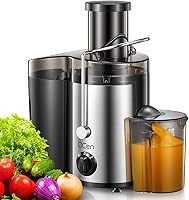
A centrifugal juicer can suit you if you want to make juice from a mix of fruits and vegetables without cutting every piece into small chunks. The wide feed chute on some models reduces prep for suitable produce, but larger machines may take more counter or storage space.
The Hamilton Beach Centrifugal Juicer Machine With Big has a 3-inch feed chute for whole apples, celery and handfuls of carrots. Its removable pulp bin, juice bowl, lid and pusher are dishwasher safe, and it includes a cleaning brush.
Check whether the pulp bin and juice container suit the batch size you make. A large chute may save prep time, but it does not mean all ingredients can go in whole.
When should you consider a slow or cold press juicer?
Consider a slow or cold press juicer if its extraction style matches your ingredients and you are comfortable with its prep and cleaning steps. If you're comparing slow-juicer brands, see Kuvings vs Nama juicers.
These machines are commonly compared for leafy greens and slower extraction, but features vary by model.
Compare the feed opening, required cutting, pulp handling and cleaning instructions. For a model-specific walkthrough, see Ninja cold press juicer.
For a basic explanation of the method, see [What Is a Press Juicer?
A Beginner’s Guide](/what-is-a-press-juicer/).
What should you check before buying?
Check fit, daily effort and maintenance before comparing extra features. A machine that matches your recipes but is hard to store or wash may be a poor fit for your routine.
- Produce: Confirm the maker says the juicer suits your main ingredients.
- Prep: Check whether you need to peel, pit or cut produce before feeding it.
- Feed opening: A larger chute may reduce cutting for produce that fits safely.
- Pulp: Look at whether pulp collects in a bin or basket, and whether you can adjust it.
- Cleanup: Check which parts detach and whether the maker says they are dishwasher safe.
- Size: Measure the countertop and cabinet space, including room to assemble and clean the machine.
- Noise and pace: Consider when you plan to juice and how much time you can spend making a batch.
- Budget: Compare the features you will use with the cost, and avoid paying for capacity or functions you do not need.
If you’re new to juicing, our best juicers for beginners guide can help narrow the options. Also consider what you want from juicing before adding another appliance; our pros and cons of juicing guide lays out common trade-offs.
How much counter and storage space do you have?
Measure the counter where you expect to use the juicer and the cabinet or shelf where you’ll store it. Include room for its parts and for handling produce, not just the machine’s footprint.
A compact manual citrus juicer may be easier to put away than an electric juicer with a pitcher or pulp container. A centrifugal juicer with a feed chute and separate pulp bin may need more room to assemble and clean.
Check the cord length and where the outlet sits, then make sure you can lift removable parts without bumping nearby cabinets. If you plan to leave the juicer out, think about whether its footprint competes with the space you use for everyday cooking.
What kind of cleanup can you keep up with?
Choose a juicer whose cleanup steps fit your schedule. Removable, dishwasher-safe parts can make washing easier, but read the care instructions for each model.
Pulp can dry onto strainers and reamers if you leave them after juicing. Rinsing parts soon after use may make cleanup simpler; use any included brush as directed.
Compare the number and shape of parts that need washing, whether the strainer requires brushing, and how easily pulp can be emptied. If cleanup is the step most likely to stop you from juicing, a simple citrus reamer may be more practical than a multi-part machine.
Should you buy a juicer or use a blender?
Buy a juicer if you want juice separated from much of the fruit and vegetable pulp. Choose a blender if you want to blend ingredients together into a thicker drink.
A blender and juicer make different textures, and one does not automatically replace the other. Consider what you already make, whether you want pulp in the drink, and how much counter space you can spare.
If you are also comparing blender types and features, see our best blender to buy guide.
How to choose between the main options
The right juicer is the one that matches what you will juice and how you want to prepare it. Start with your ingredients, then compare prep, cleanup, size and budget.
- Pick a manual citrus juicer for occasional lemon, lime or orange juice with minimal storage needs.
- Pick an electric citrus juicer if you want powered reaming and features such as adjustable pulp control.
- Pick a centrifugal juicer if you want juice from varied produce and value a wider feed chute.
- Consider a slow or cold press model if its process suits your ingredients and routine.
- Pick a blender if you want a thicker drink with the ingredients blended together.
Before you decide, check that the machine fits your kitchen and that its cleaning steps seem workable. A juicer you can store, use and wash comfortably is more likely to suit your everyday routine.
Frequently asked questions
Which type of juicer should a beginner buy?
Start with the type that matches the juice you plan to make most. A manual or electric citrus juicer suits lemons, limes, oranges and grapefruit; a centrifugal juicer suits mixed fruit and vegetables when speed matters.
If you mainly want smoothies, compare a blender instead.
Is a centrifugal or cold press juicer better?
Neither type is best for everyone. Centrifugal juicers are a practical fit when you want quick batches and a wide feed chute; cold press juicers suit shoppers willing to use a slower extraction process.
Compare the produce you use and the cleanup steps before choosing.
Do I need a juicer if I already have a blender?
You need a juicer only if you want juice separated from much of the fruit or vegetable pulp. A blender keeps the ingredients together in a thicker drink, so it can be more useful for smoothies.
Choose based on the texture and recipes you make most.
What should I check before buying a juicer?
Check which produce the juicer can handle, how much cutting it needs, the size of the feed chute or reamer, and how its parts are cleaned. Also measure the counter and storage space, then consider how often you expect to use it.